The Beauty We Miss — and Why That’s the Point
The rare bloom of the Titan Arum in Warsaw became more than a spectacle. It revealed nature’s fragility, offered a different perspective, and reminded us of the beauty we miss.

Not everything rare is meant to be seen. Some of the most fragile, extraordinary things unfold quietly, away from an audience — existing not to impress but simply because that is their cycle. In a world so often driven by performance and appearances, nature reminds us that authenticity doesn’t need applause.
In a world so often driven by performance and appearances, nature reminds us that authenticity doesn’t need applause.
One such example appeared in Warsaw. In the early hours of August 5, 2025, something special unfolded in the University of Warsaw Botanical Garden. After four years of silence underground, Amorphophallus titanum — the titan arum, also known as the corpse flower — opened its colossal bloom. The bloom began during the night. By morning, it was already beginning to fade. Those who arrived at 7:30 am, when the gates opened, witnessed its brief peak; by noon, most visitors, myself included, found a flower already in decline.
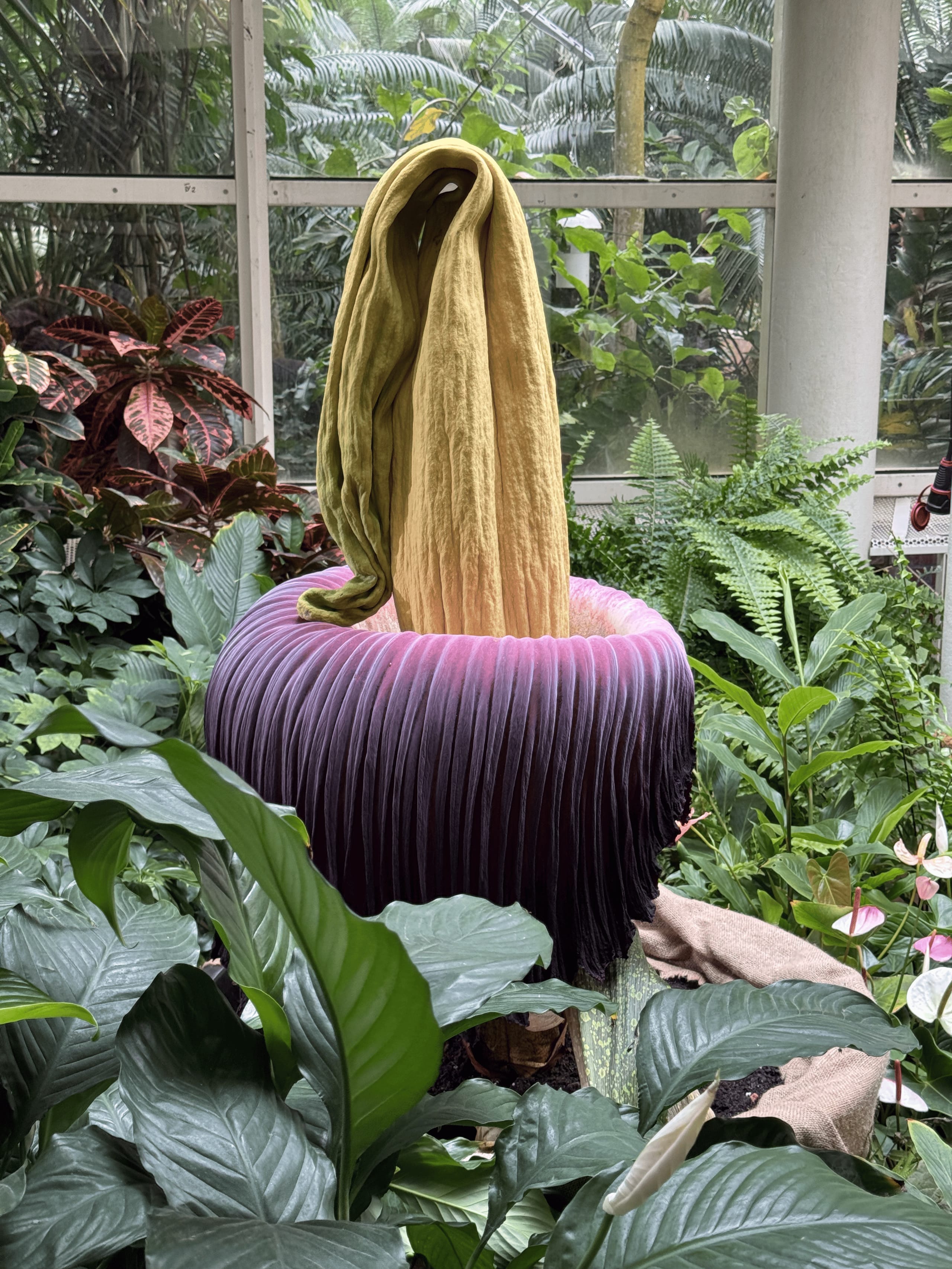

Amorphophallus titanum at the University of Warsaw Botanical Garden on Aug 5 (12:30 pm), 2025. Photo: Warsawslook
For years — sometimes even a decade — it hides underground in a massive tuber that can weigh up to 100 kilograms, silently gathering energy for a single bloom.
A life hidden underground
Native to the rainforests of Sumatra (Indonesia), the titan arum spends most of its life unseen. For years — sometimes even a decade — it hides underground in a massive tuber that can weigh up to 100 kilograms, silently gathering energy for a single bloom. When it finally emerges, the spectacle is staggering: the flower heats up to spread its odor of decaying flesh, tricking carrion beetles and flies into visiting. These insects, drawn by the promise of food, become unwitting pollinators.
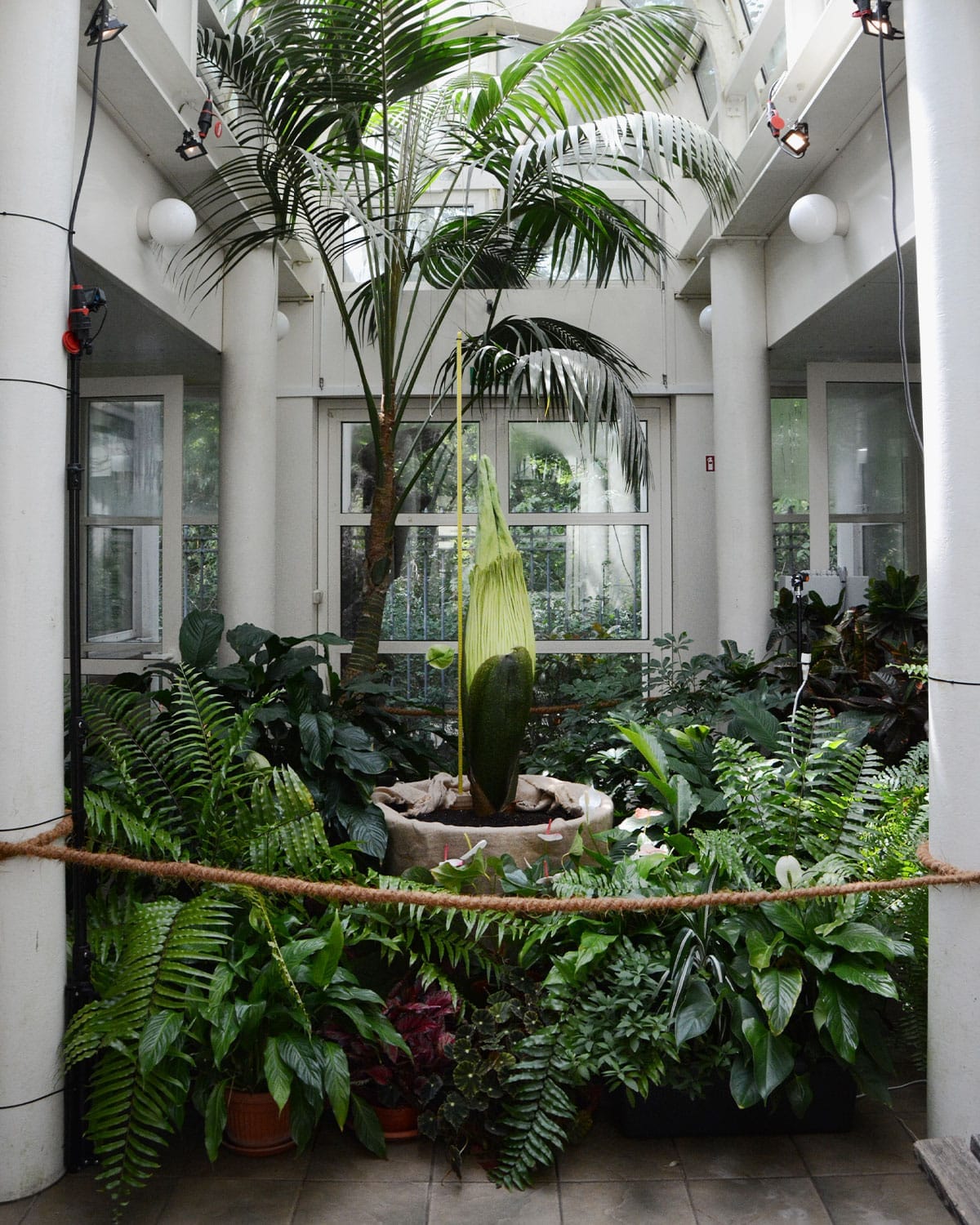
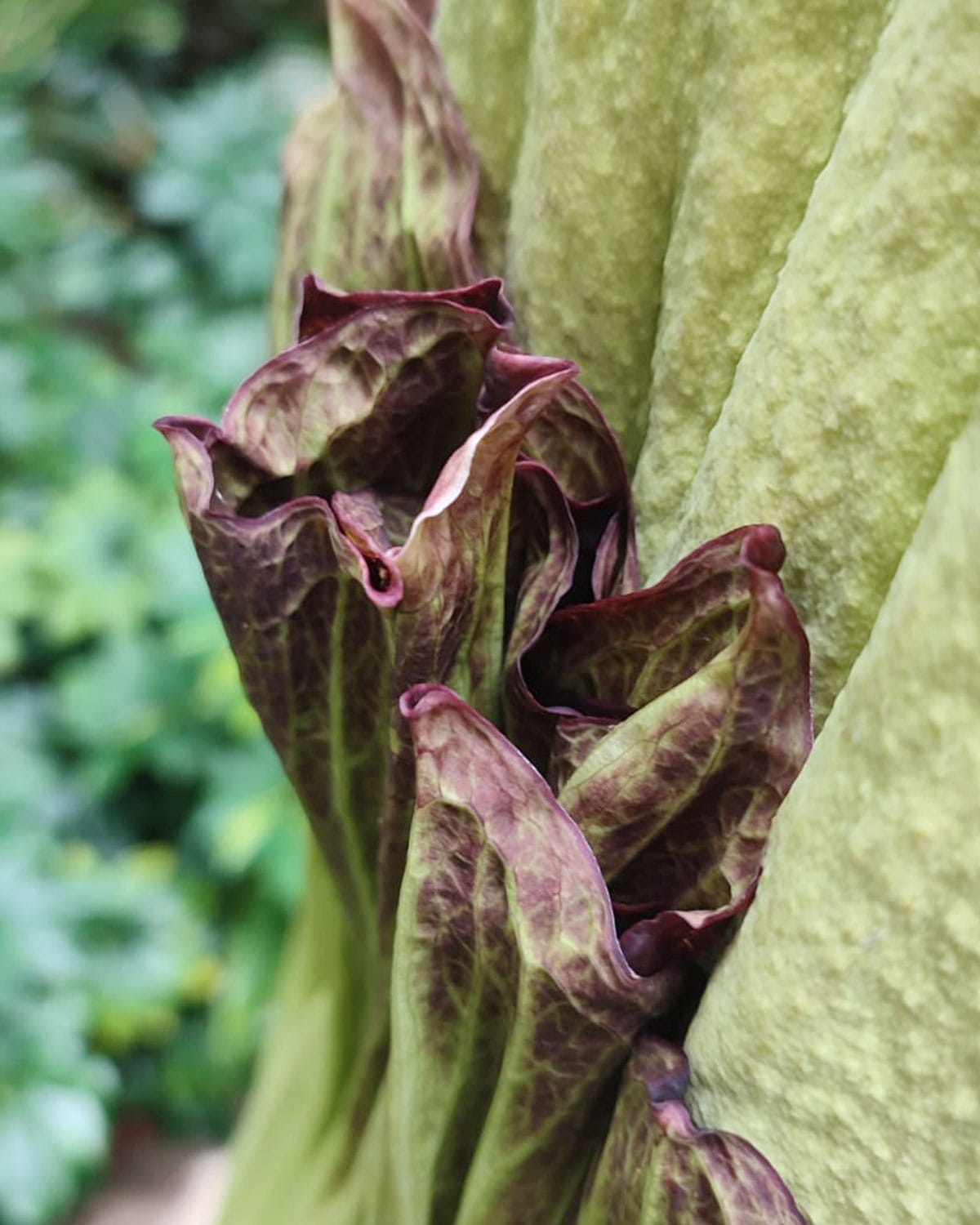
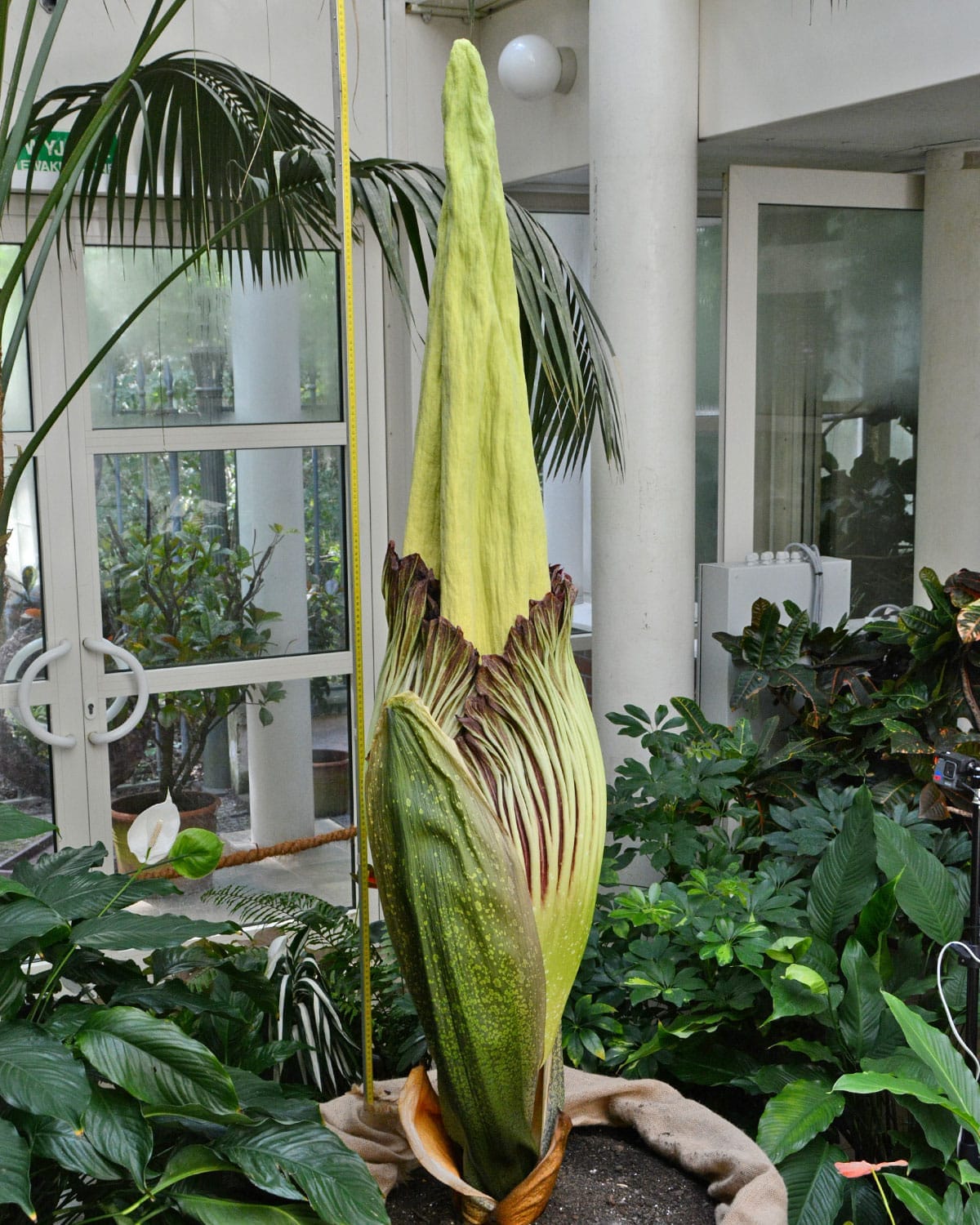
Amorphophallus titanum in the University of Warsaw Botanical Garden, 2025. Photo: University of Warsaw Botanic Garden
Within 24 to 48 hours, it collapses again, vanishing underground for years.
Why Warsaw paid attention
The titan arum’s bloom is rare anywhere in the world, which is why its appearance drew crowds and TV cameras to Warsaw. This was only the second time in Polish history that it flowered, the first being in 2021 — also in this garden, from the same plant.
Its very presence here is a story of chance. Years ago, a private resident, Mr. Grzegorz, unable to care for it, donated the tuber to the Botanical Garden. Since then, the garden has patiently nurtured it, and twice now the city — and the country - has been rewarded with a bloom that most people never see in their lifetime.

A global phenomenon
Every bloom of the titan arum, wherever it happens, becomes news:
- In 2024, one in Belgium broke records by reaching 3.2 meters tall.
- At Kew Gardens in London, these blooms have drawn crowds since the 19th century.
In every case, the story is the same: years of waiting, one or two days of spectacle, then silence again.
... it’s impossible to see everything at once. And if we can’t, then perhaps what we need is not more moments, but a different way of looking — a shift in focus, and the ability to appreciate what surrounds us here and now.
A quiet lesson
At first, the brevity of the corpse flower feels disappointing - four years of waiting for just a day or two of bloom. But perhaps that is the wisdom it offers. After all, it’s impossible to see everything at once. And if we can’t, then perhaps what we need is not more moments, but a different way of looking — a shift in focus, and the ability to appreciate what surrounds us here and now.
The titan arum does not bloom for us, nor to be admired, nor to last long enough for everyone to see. Its rhythm is its own.

There’s a lesson in that. We often act for an audience, shaping our choices to please, impress, or belong. The titan arum, blooming unseen in the dark of night, reminds us that life is not measured by recognition but by authenticity.
It blooms because it must. And in that, it mirrors something we often forget: the most essential things in life — love, creativity, meaning — are rarely born to impress. They simply unfold, whether or not anyone is watching.
And maybe that is why we are drawn to moments of unfiltered sincerity. It’s the same reason why on social media, the most captivating videos are often not staged performances, but someone catching a fleeting scene: two people in love, sharing a quiet joy, unaware of being observed. That kind of authenticity — fragile, fleeting, unplanned — inspires us far more than any polished performance. Because sincerity, like the titan’s bloom, doesn’t ask for attention, yet it leaves us changed!